How Smaller Elderly Care Settings Improve Security, Guidance, and Support
Business Name: BeeHive Homes of Volcano Cliffs
Address: 6230 Montaño Rd NW, Albuquerque, NM 87120
Phone: (505) 302-1919
BeeHive Homes of Volcano Cliffs
At BeeHive Homes of Volcano Cliffs, New Mexico, we offer the finest assisted living experience available in a cozy, comfortable homelike setting. Each of our residents has their own spacious room with an ADA approved bathroom and shower. We prepare and serve delicious home-cooked meals three times a day every day. We maintain a small, friendly elderly care community. We provide regular activities that our residents find fun and contribute to their health and well-being. Our staff is attentive and caring and provides assistance with daily activities to our senior living residents in a loving and respectful manner. We would like to invite you to tour and experience our assisted living home and feel the difference.
6230 Montaño Rd NW, Albuquerque, NM 87120
Business Hours
Most families begin exploring senior care after a scare: a fall in the house, a medication mix‑up, a roaming incident, or a progressive decrease that suddenly becomes impossible to ignore. In those minutes, the world of assisted living and elderly care can seem like an alphabet soup of alternatives and sales language. Buried in the information is one aspect that silently shapes nearly everything about a resident's every day life: the size of the care setting.
Having dealt with older adults in both large neighborhoods and small residential homes, I have seen the difference that scale makes. Bigger is not instantly even worse, and smaller is not automatically much better. However when the top priority is safety, close guidance, and truly customized support, attentively run smaller settings have some structural benefits that are tough to duplicate in a big structure with a hundred residents.
This does not imply everyone must hurry toward the tiniest home they can discover. It indicates families should comprehend how size impacts care, what trade‑offs are involved, and how to inform a well run small environment from one that just calls itself "cozy".
What "small" really indicates in elderly care
People utilize the term "small" to describe whatever from a 20‑apartment assisted living wing to a four‑bed residential care home. To comprehend the impact on safety and guidance, it helps to draw some rough lines.
In lots of areas, senior care settings fall into three broad groups:
- Large communities: normally 60 to 200 residents, typically with multiple floorings, dining spaces, and activity spaces.
- Mid sized centers: roughly 20 to 60 homeowners, typically a single structure or wing, sometimes part of a bigger campus.
- Small residential settings: usually 3 to 16 locals, typically licensed as adult family homes, board‑and‑care, residential care homes, or comparable names depending upon the state or country.
The labels vary by jurisdiction, but the lived experience in a 10‑resident home is extremely different from that in a 120‑resident facility.
In a large assisted living neighborhood, the benefits generally center on features: restaurant‑style dining, regular activities, on‑site therapy, transport, and a sense of a "village" under one roof. The trade‑off is that personnel must cover a great deal of ground. A caregiver might be responsible for 12 to 18 residents throughout a shift, in some cases more, typically spread throughout a long passage or several wings.
In a genuinely small elderly care home, there might be 1 or 2 caregivers for 6 to 10 locals, all within line of vision or just a brief corridor away. There is generally one kitchen, one main living location, and bedrooms nestled carefully around them. What you give up in shiny facilities, you acquire in distance. That distance is what equates into safety and supervision.
Why physical scale shapes safety
When we discuss "safety" in senior care, we are truly talking about specific threats: falls, roaming and exit‑seeking, medication mistakes, choking and aspiration, delayed action in emergencies, and unnoticed modifications in health status. Size influences each of these, frequently in subtle ways.
In a smaller setting, staff can literally hear more. A chair scraping on tile, a closet door opening, a resident muttering in the hallway at 3 a.m. These small sounds frequently precede an occurrence. In a large structure with long corridors, heavy fire doors, and mechanical sound, those early cues are simple to miss.
One afternoon in a 9‑bed home, a caregiver I dealt with stopped briefly mid‑conversation and stated, "That is not her typical cough." She walked down the hall, examined a resident, and found that she had begun aspirating on a sip of water. Quick intervention, immediate call to the doctor, medical facility visit, and the resident recovered. Would that have been captured as quickly in a dining room with 70 individuals talking over clattering meals? Perhaps, however less likely.
Smaller environments also reduce the distance in between danger and action. If a resident stand unsteadily, a caregiver three actions away can offer an arm. In a huge facility, a resident may stroll a surprising range before anybody notices, especially if staffing ratios are stretched at certain times of day.
None of this indicates big communities can not be safe. Many are, and they typically have assisted living facilities in albuquerque nm more video cameras, nurse coverage, and security technology. But innovation seldom makes up for the simple reality that in a smaller space, it is harder for a problem to stay concealed for long.
Staff exposure and supervision
Supervision is not almost watching people; it is about understanding them well enough to observe modification. Smaller elderly care homes tend to produce that familiarity by design.
In a 6 to 12 resident home, every caregiver typically understands:
- Each resident's typical walking speed and posture.
- How they like their coffee or tea.
- Which jokes land and which do not.
- What "typical" confusion looks like for that person and what feels off.
That accumulated understanding becomes an informal early‑warning system. An experienced caregiver in a small setting will typically say things like, "She is quieter at breakfast today; something is brewing" or "He usually sleeps after lunch, but he has been pacing for an hour." That sort of pattern recognition is much more difficult when a single person is managing 15 citizens throughout 2 hallways.
Larger assisted living neighborhoods attempt to construct supervision through systems: routine rounding, electronic care notes, event reports, scheduled assessments. Those are essential, but they can create a rhythm where personnel react to tasks instead of to people. In a small home, jobs are still there, but they are woven into normal household life. Staff see residents from several angles in a single day: at the kitchen table, in the hallway, in the garden, throughout a TV show. Supervision is built into every interaction.
Families frequently notice this distinction during respite care. A loved one may stay for 2 weeks in a 100‑resident neighborhood, then 2 weeks in an 8‑resident home. In the bigger community, the household may receive a package of notes, a care summary, and scheduled updates. In the smaller home, they frequently hear, "She has actually begun humming once again after lunch; she seems more relaxed" or "He is eating much better if we sit with him and serve smaller parts first." Both techniques have worth, but for vulnerable grownups with dementia, the granular observations frequently prevent larger problems.
Medication management and medical oversight
Medication mistakes are one of the most common safety risks in any senior care environment. Missing out on a dosage of blood pressure medication may not cause an immediate crisis. Doubling insulin or mismanaging blood thinners can.
In bigger facilities, medication management typically counts on medication carts, set up "med passes," bar‑code scanning, and different medication service technicians. That structure can be very safe when staffing is stable and workflow is well organized. The threat comes on busy shifts: a smoke alarm, a fall, three residents requesting for aid at once, and a med tech hurriedly moving through a long list.
In smaller settings, there is seldom a med cart rolling down halls. Medications are usually kept in a locked cabinet or room, and the exact same caretakers who help with bathing and meals likewise deal with regular medications, within their training and the policies of their region. The resident list is much shorter, the timing more flexible. Staff may offer high blood pressure tablets over breakfast, eye drops in the restroom a few minutes later on, and prescription antibiotics throughout afternoon tea.
The security benefit here originates from two aspects. First, less locals imply less complex schedules to manage at once. Second, caregivers typically notice patterns quickly: "She is stealing her pills in the afternoon; we ought to try giving that one squashed with applesauce" or "He looks off whenever we increase that dose." That feedback loop in between observation and medical change tends to be tighter in a smaller environment, especially when a nurse or doctor is accessible and engaged with the home.
That stated, small homes can fail if they do not have strong medical oversight. Households should ask how the home collaborates with doctors, who evaluates medications regularly, and how personnel are trained. A cottage without great systems can be more dangerous than a large community with robust medical protocols.
Fall threat and the layout of everyday life
Falls rarely occur out of nowhere. They approach through subtle shifts: a somewhat longer distance to the bathroom, a new thick carpet in the hallway, a chair put a little too far from the table. In a large center, maintenance and style choices are produced lots of people at once. That can work, however it inevitably suggests compromise.
In a small elderly care home, the physical environment is more like a standard home: less stairs, shorter distances, and typically one primary area where people collect. Personnel relocation through the very same spaces continuously. If a carpet starts to curl at the corner, someone normally trips lightly or notifications it within a day or 2, not weeks later throughout an official inspection.
The scale likewise permits practical personalization. If a resident with Parkinson's freezes in narrow spaces, hallway furnishings can be reorganized quickly. If someone with dementia puzzles the bathroom door, staff can include a colored sign or memory cue simply for that individual. These small ecological tweaks directly lower fall danger and roaming without feeling institutional.
I remember one resident, a previous carpenter, who kept trying to "repair" things in a large structure. In the smaller home he moved to later on, staff provided him a safe tool kit with blunt tools and small jobs: tightening cabinet knobs, inspecting chair legs. His agitated walking ended up being purposeful motion, and his fall events dropped over the next months. That sort of flexible response is much easier to try when you are handling a single living room, not a five‑floor complex.
Emotional safety and the rhythm of the day
Physical security is only half the story. Emotional security matters simply as much, specifically for older adults coping with amnesia, stress and anxiety, or depression.
Large communities usually operate on schedules changed for operational efficiency. Breakfast from 7 to 9, activities at 10, lunch at 12, showers on assigned days, medication passes at set times. Many homeowners appreciate the structure and range, however particular people can feel swept along by a schedule that does not match their natural rhythm.
In a small residential senior care home, the pace is more detailed to domestic life. If somebody prefers coffee at 6 a.m. And breakfast at 9, it is much easier to accommodate. If another resident sleeps inadequately and wishes to sit quietly with a caregiver at 3 a.m. Viewing old movies, there is space for that without interrupting lots of others.
This versatility has a direct impact on agitation, specifically in residents with dementia. When people are not constantly being hurried, lined up, or asked to adjust to group schedules, they tend to be calmer and less resistant. Less agitation methods fewer incidents that intensify to physical restraint, sedating medications, or emergency situation transfers.
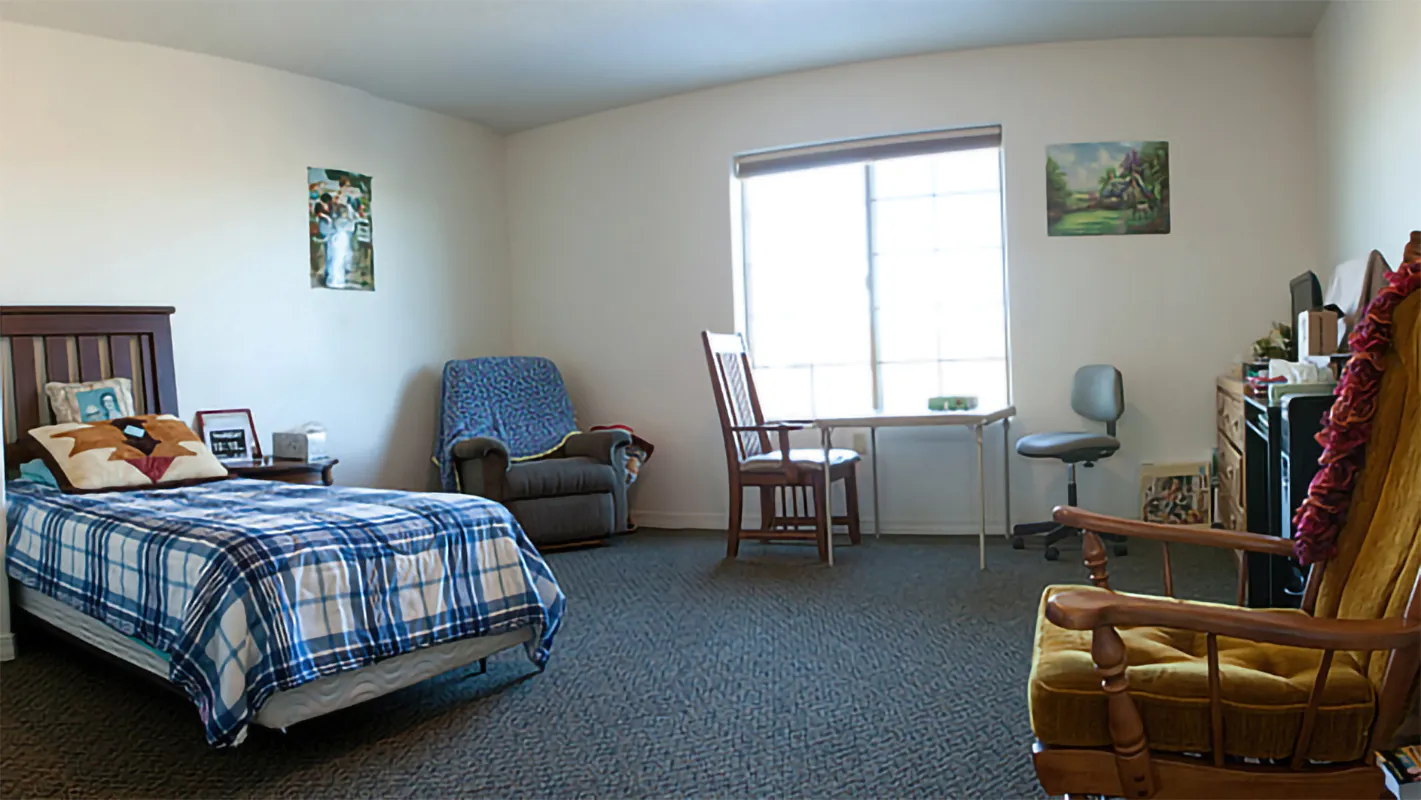
I have actually seen households surprised by how a parent's "behavior issues" soften in a small assisted living or board‑and‑care home. A woman who hit staff in a big memory care system stopped doing so when she could consume in a small group at a home‑style table and spend afternoons folding towels in the kitchen. The habits had been a communication of overwhelm, not an unchangeable personality trait.
The role of smaller settings in respite care
Respite care is often the very first genuine test of any elderly care arrangement. A brief stay offers everybody a chance to see how a setting handles unfamiliar routines, medical conditions, and emotional needs.
In a large assisted living or memory care neighborhood, respite stays can be extremely structured: official admission assessments, printed care strategies, a set space for a restricted time, sometimes a minimum stay requirement. This works well for senior citizens who adjust quickly to new environments and enjoy activity calendars filled with options.
Smaller homes tend to integrate respite homeowners directly into daily life. There may be a spare bedroom that ends up being "Grandfather's space," with the exact same caregivers and regimens as irreversible locals. On the first day, staff may sit down with the household at the cooking area table, review medications and choices, and see how the individual moves, eats, and interacts.
For caretakers in the house who are already extended thin, sending a loved one to a small residential home for respite can feel closer to handing them to an extended household. That sense of continuity impacts how willingly older grownups accept the break. A male who refused respite in a large building with busy passages often accepts "remain for a few days in that home with the garden and friendly dog."
Respite is likewise where guidance quality ends up being noticeable rapidly. Families returning after a week can detect information: Is the laundry done and labeled appropriately? Does their loved one keep in mind staff names and feel at ease? Does the staff recount specific occasions and choices, or just refer to generic "She did fine"?
Family participation and transparency
One of the peaceful strengths of smaller elderly care homes is the transparency that comes with limited space. Families see more of what happens, excellent and bad.
When you stroll into a large senior care center, you generally pass through a lobby, maybe a receptionist, then down hallways to a resident's room. You see a slice of life: a few personnel, some residents in common spaces, design, published menus and calendars. Much takes place behind doors and on other floors.
In a smaller home, you typically step directly into the main living location. The kitchen smells are right there. You can hear how personnel talk to residents, notice whether call lights are going unanswered, and see who is actually on shift. If something feels off, it is hard for the environment to conceal it.
This exposure can reinforce cooperation. Families are more likely to have casual chats with caregivers, share observations, and adjust care together. That continuous discussion normally catches problems early: skin changes, mood shifts, family characteristics, financial concerns. It likewise develops trust, which is critical when tough decisions occur about hospitalizations, hospice, or transitions.
Trade offs and limitations of smaller settings
Small does not mean perfect. Every design of senior care has trade‑offs, and it is important to take a look at them honestly.
One obstacle is staffing depth. A big assisted living community with 80 locals may have a nurse on website every day, plus several caregivers, med techs, and backup personnel. If somebody employs sick, there is usually a pool to draw from. In a 6‑resident home, losing even one caretaker to health problem can strain the group if there is not a strong backup plan.
Another concern is access to on‑site services. Bigger buildings might offer on‑site physical therapy, checking out specialists, pharmacy delivery a number of times a day, and transportation vans. A small residential care home may rely more on outdoors suppliers can be found in or families organizing visits. For extremely clinically intricate locals, that additional coordination can be a burden.
Social variety is likewise different. Some outgoing seniors thrive in a large community with lots of prospective buddies and numerous activities every day. They take pleasure in the sensation of "heading out" to performances, lectures, and exercise classes without leaving the structure. In a small home, the social circle makes love. For some, that feels like household. For others, it can feel limiting.
Regulation and oversight can differ also. In many areas, small facilities are licensed under different classifications with different examination frequencies. Some are outstanding and firmly run; others cut corners. Families can not presume that "home‑like" immediately implies "high quality."
The key is to match the setting to the person's needs and character, and then examine the real operation of the home, not just its size.
A short comparison: where small settings typically excel
Used carefully, a concise comparison can clarify where small elderly care homes tend to have an edge. For numerous citizens with safety and supervision requirements, smaller environments usually supply:
- Shorter action times when someone needs help or an alarm sounds.
- Closer observation and earlier detection of modifications in health or behavior.
- More flexible everyday routines that reduce agitation and resistance.
- Stronger staff‑resident relationships, causing customized support.
- Easier family interaction and greater openness day to day.
These are propensities, not assurances. Some large communities strive to match or even surpass these qualities. Still, the structural advantages of proximity and familiarity are hard to ignore.
How to evaluate a small elderly care home
For households considering a move to a smaller setting, the key is not just "Is it small?" but "Is it well run, safe, and aligned with our requirements?" It helps to ground the search in a short psychological checklist during visits.
Here is one straightforward way to focus your attention while touring or setting up respite care:
- Watch how personnel speak with homeowners: tone, persistence, eye contact, and whether they utilize names.
- Notice smells and sounds: strong smells, consistent alarms, or raised voices can signify problems.
- Ask particular questions about staffing ratios on nights and weekends, not simply weekdays.
- Look for detailed knowledge: can staff describe each resident's preferences and health issues?
- Clarify how emergency situations, healthcare facility transfers, and communication with families are handled.
You are not just buying a space; you are signing up with a small environment. The quality of that environment will shape your loved one's security and sense of home more than any brochure.
Where smaller settings fit in the bigger senior care landscape
Elderly care is seldom a straight line. Numerous older grownups move between levels and kinds of care in time: independent living, assisted living, memory care, health center stays, skilled nursing, and hospice. Small residential homes and intimate assisted living settings fill an important specific niche in that landscape.
For those who are too frail or cognitively impaired to live alone, however who do not require the strength of a nursing home, a small setting can provide the best level of structure and guidance without compromising self-respect and individuality. For household caregivers nearing burnout, a short respite in a small home can prevent crisis and extend the possibility of continued care at home.
The pattern in lots of areas has been a steady shift toward these "home within a home" models. Some large campuses now create their memory care or high‑acuity assisted living as clusters of small families under one bigger umbrella. Each family may host 10 to 14 residents, with its own kitchen and care team. That hybrid technique attempts to blend the intimacy of small homes with the resources of a large organization.
At its finest, elderly care is not about buildings at all. It is about relationships, regimens, and actions to vulnerability. Smaller settings, when attentively staffed and well regulated, frequently make those human aspects easier to provide. They produce environments where personnel can truly understand locals, where families can stay carefully involved, and where safety is the result of continuous, peaceful attentiveness rather than occasional crisis response.
For families standing at the crossroads of senior care decisions, taking notice of size is not a small detail. It is a practical method to forecast how well a setting will safeguard your loved one from avoidable harm, how closely they will be monitored, and how personally they will be supported in the everyday business of living the later chapters of their life.
BeeHive Homes of Volcano Cliffs provides assisted living care
BeeHive Homes of Volcano Cliffs provides respite care services
BeeHive Homes of Volcano Cliffs supports assistance with bathing and grooming
BeeHive Homes of Volcano Cliffs offers private bedrooms with private bathrooms
BeeHive Homes of Volcano Cliffs provides medication monitoring and documentation
BeeHive Homes of Volcano Cliffs serves dietitian-approved meals
BeeHive Homes of Volcano Cliffs provides housekeeping services
BeeHive Homes of Volcano Cliffs provides laundry services
BeeHive Homes of Volcano Cliffs offers community dining and social engagement activities
BeeHive Homes of Volcano Cliffs features life enrichment activities
BeeHive Homes of Volcano Cliffs supports personal care assistance during meals and daily routines
BeeHive Homes of Volcano Cliffs promotes frequent physical and mental exercise opportunities
BeeHive Homes of Volcano Cliffs provides a home-like residential environment
BeeHive Homes of Volcano Cliffs creates customized care plans as residents’ needs change
BeeHive Homes of Volcano Cliffs assesses individual resident care needs
BeeHive Homes of Volcano Cliffs accepts private pay and long-term care insurance
BeeHive Homes of Volcano Cliffs assists qualified veterans with Aid and Attendance benefits
BeeHive Homes of Volcano Cliffs encourages meaningful resident-to-staff relationships
BeeHive Homes of Volcano Cliffs delivers compassionate, attentive senior care focused on dignity and comfort
BeeHive Homes of Volcano Cliffs has a phone number of (505) 302-1919
BeeHive Homes of Volcano Cliffs has an address of 6230 Montaño Rd NW, Albuquerque, NM 87120
BeeHive Homes of Volcano Cliffs has a website https://beehivehomes.com/locations/volcano-cliffs/
BeeHive Homes of Volcano Cliffs has Google Maps listing https://maps.app.goo.gl/vC78eXZrUYuJ298v9
BeeHive Homes of Volcano Cliffs has Instagram page https://www.instagram.com/beehivealbuquerquewest
BeeHive Homes of Volcano Cliffs has an TikTok page https://www.tiktok.com/@beehivehomesalbuq
BeeHive Homes of Volcano Cliffs won Top Assisted Living Homes 2026
BeeHive Homes of Volcano Cliffs earned Best Customer Service Award 2025
BeeHive Homes of Volcano Cliffs placed 1st for Senior Living Communities 2026
People Also Ask about BeeHive Homes of Volcano Cliffs
What is BeeHive Homes of Volcano Cliffs Living monthly room rate?
Our base rate is $7,100 per month. We do an assessment of each resident's needs upon move-in, so each resident's rate may be slightly higher. However, there are no add-ons or hidden fees. We also charge a one-time community fee of $2,000 at move-in
Does Medicare or Medicaid pay for a stay at Bee Hive Homes?
Medicare pays for hospital and nursing home stays, but does not pay for assisted living. Some assisted living facilities are Medicaid providers, but we are not. We do accept private pay, long-term care insurance, and we can assist qualified Veterans with approval for the Aid and Attendance program
Do we have a nurse on staff?
We do have a nurse on contract who is available as a resource to our staff but our residents' needs do not require a nurse on-site. We always have trained caregivers in the home and awake around the clock
What can you tell me about the food at Bee Hive?
You have to smell it and taste it to believe it! We use dietitian-approved meals with alternates for flexibility, and we can accommodate needs for different texture and therapeutic diets. We have found that most physicians are happy to relax diet restrictions without any negative effect on our residents
Do we allow pets?
We do allow small pets as long as the resident is able to care for them. State regulations also require that we have evidence of current immunizations for any required shots
Where is BeeHive Homes of Volcano Cliffs located?
BeeHive Homes of Volcano Cliffs is conveniently located at 6230 Montaño Rd NW, Albuquerque, NM 87120. You can easily find directions on Google Maps or call at (505) 302-1919 Monday through Sunday 10:00am to 7:00pm
How can I contact BeeHive Homes of Volcano Cliffs?
You can contact BeeHive Homes of Volcano Cliffs by phone at: (505) 302-1919, visit their website at https://beehivehomes.com/locations/volcano-cliffs/ or connect on social media via Instagram Facebook or TikTok
Conveniently located near BeeHive Homes of Volcano Cliffs Flix Brewhouse Albuquerque Coors a great movie theater with full food & drink menu. Catch a movie and enjoy some great food while you wait.
Corrections
Spot something wrong? Send it to the desk and it gets fixed in the open.